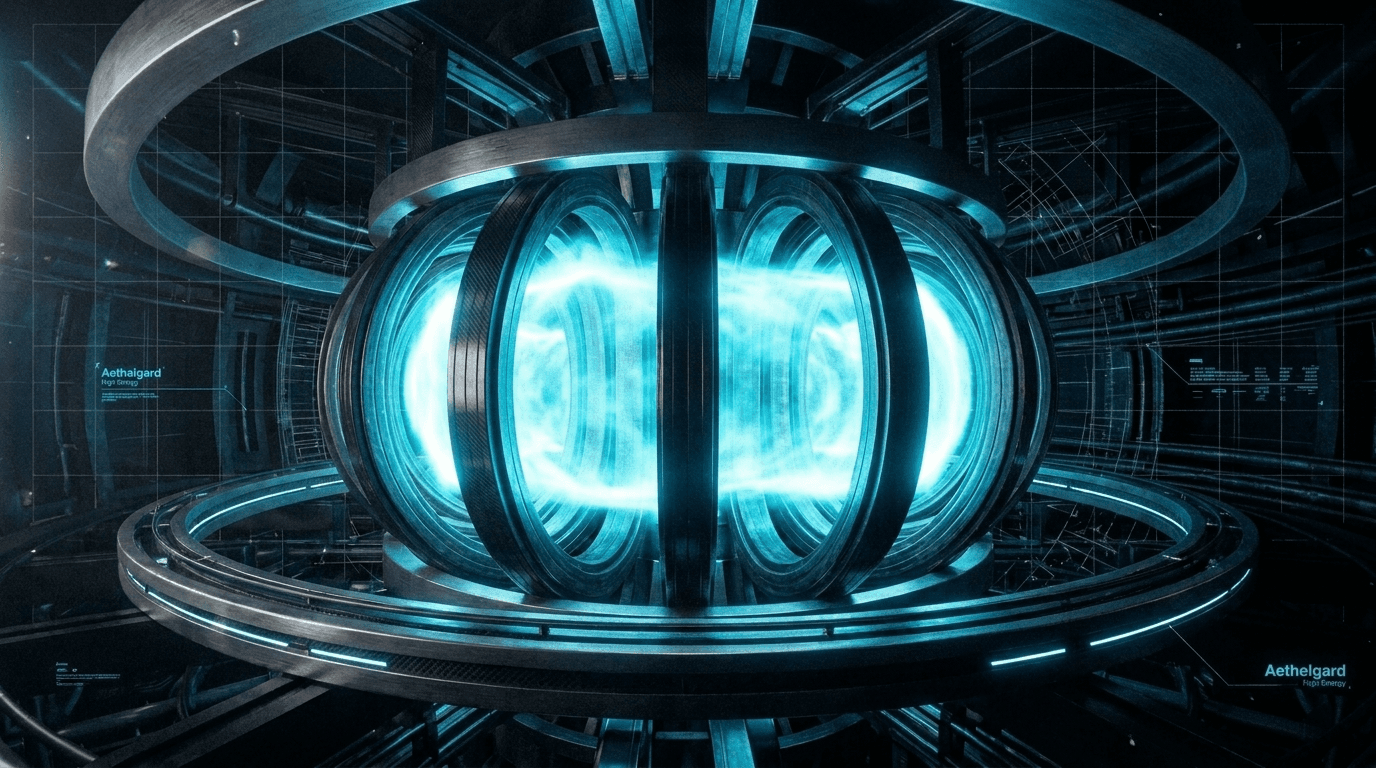
Fusion energy
Fusion is not a slogan. It is an engineering capability stack.
The long-term goal is to explore very low-cost electricity paths in specific high-load contexts.
Live visual layer
Fusion energy / long-horizon research and engineering vision.
Module 01
Energy boundary
Energy is a hard boundary for civilization
Energy is a hard boundary for civilization
Module 02
Engineering path
Start from supply chains, critical technologies, and engineering capability
Start from supply chains, critical technologies, and engineering capability
Module 03
Commercial path
High-load zones are better early commercialization contexts
High-load zones are better early commercialization contexts
Engineering narrative
Why fusion is framed here as an engineering path, not a mythic slogan
The goal is not to shout about building a sun. It is to break the problem into supply chains, critical technologies, engineering systems, and realistic early-use contexts.
Energy boundary
Acknowledge energy as a civilizational ceiling before talking about a route
Energy is a hard boundary for civilization
AI data centers, industrial parks, hydrogen, desalination, and energy-intensive manufacturing all demand stable, scalable, lower-cost power systems. Fusion matters here because it may eventually change density and scale.
Engineering path
Enter through subsystems and capability stacks, not through claims of a finished plant
Start from supply chains, critical technologies, and engineering capability
HTS magnets, pulsed power, plasma control, materials, thermal handling, cryogenic systems, and fuel-cycle engineering determine whether fusion becomes an industrial path instead of a distant concept.
Commercial path
High-load contexts are the more realistic early commercial wedge
High-load zones are better early commercialization contexts
Rather than jumping immediately into the general grid, an earlier route is to serve local environments where electricity price, uptime, and power density matter most, then validate cost and operations step by step.